
Guest Column
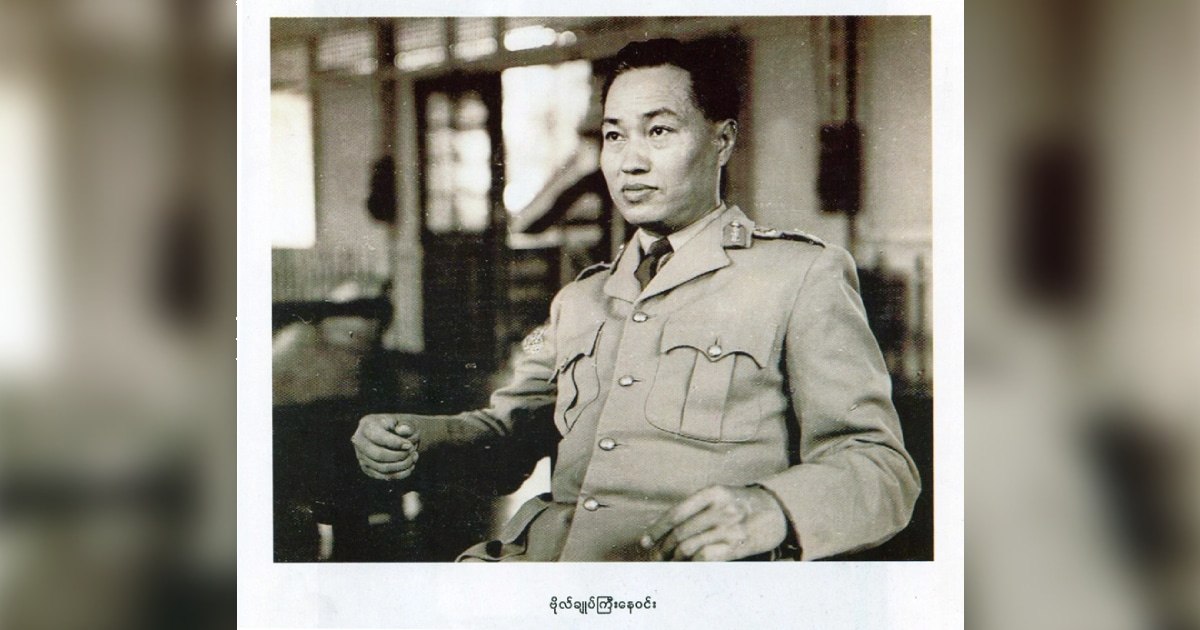
General Ne Win, the leader of the 1958 and 1962 military coups.
By David I. Steinberg 1 March 2022
By 1 March 2022
Sixty years is considered an auspicious life cycle in many countries in East Asia. After weathering five rounds of 12 zodiac signs, one enters a state of revered age, with the social respect and wisdom those advanced years are supposed to bestow. It is a happy event.
On March 2, Myanmar may commemorate, but not celebrate, the 60th anniversary of the 1962 military coup that brought the Myanmar military into power it has never relinquished. The completion of that life cycle is supposed to be a celebratory event. On this occasion it is not. Through direct rule by decree, by inventing three political parties under its authority, by writing a constitution and then coercing its acceptance, by empowering itself through legal procedures under the 2008 constitution, and by manipulating electoral results, the military has remained in effective control over those societal elements it regards as essential to its interests. On the cusp of its 60th anniversary, it extended its domination through last year’s disastrous February 1 coup. The perpetuation of its influence and authority, however much disputed by the populace, will continue, forcing the state into further decline.
Six decades of military control, three generations, may set some sort of sad regional or world record for military-controlled governance. When not enforcing its self-determined mandate by direct authority, it founded three political parties to do its bidding: the Burma Socialist Programme Party, the National Unity Party, and the Union Solidarity and Development Party. None of them had even the semblance of democratic authority. All had very substantial active duty or retired military personnel in positions not only of leadership but among the ranks as well.
The year 1962, however, was not the origin of military power in Burma. It came with independence in 1948 and countering ethnic and political rebellions. The first “constitutional coup” in 1958, in which the military took power with the forced approval of the civilian government that was facing civil war within the ruling party, lasted 18 months. It was autocratic in its control but generally well-regarded, as it stemmed political and economic decline. At the close of that period, the military stepped down and allowed free elections in which its favored party lost, and U Nu ruled for about two years until the 1962 coup. That may be a unique instance of military-induced unmanaged elections.
But military rule does not mean stasis. Deterioration of the state began shortly after the 1962 coup when the “Burmese Way to Socialism” failed, as did a 1988 people’s revolution against the military. Even the military, while in control, from about 2010 began to realize the need for change and reform, and the efforts by President and former general U Thein Sein were well received both domestically and internationally. He did little, however, to placate ethnic minority rebellions and calls for a federal administrative structure, but progress was evident including broader rights for its citizens and the sharing of some power in 2016 with the elected opposition, the civilian-led National League for Democracy (NLD).
The international media has called attention to the recent worldwide waves of military coups, especially in Africa, citing Myanmar as one of a group. But to attribute Myanmar’s fourth coup in 2021, following those of 1958, 1962 and 1988, as simply an example of a worldwide trend is to misunderstand the nature of the internal problems facing the state. History tempers and shapes current dilemmas and requires analysis. Myanmar has unique issues that must be addressed.
Ethnically diverse Myanmar has been held together by the military tenaciously, and often crudely and unthinkingly, trying to control the country against the vociferous tendencies of various ethnic peoples with justified beliefs that they have been maltreated and denigrated by the ethnic Bamar majority government. The articulated primary objective of the military has always been national unity. Yet their inept actions have weakened the chance of achieving the very goals that it set for the state. There is no indication that they have changed their approach.
Ironically, the present coup has forced the NLD civilian opposition that won the November 2020 elections to expand what observers regard as their previous reluctance to pursue federal minority power. Its National Unity Government has brought more ethnic representation into its tentative opposition organization, but even if it were to assume power, how much of that would remain is questionable.
Although the military has promised a return to multi-party politics in 2023, most observers believe that whatever electoral system evolves, it will be manipulated, and whatever parties are permitted to run, it will not be a true democratic state; the military will assure that its control would continue to protect its, and what it regards as the state’s, interests. Elections alone do not a democracy make.
Foreign observers should recognize that the amelioration or solution to Myanmar’s governance problems will not come from external interventions. Humanitarian aid should be forthcoming at this dire time. But they should understand that this coup has historical roots that will affect the future, and whatever that future may be, the military will play some important role. But the Burmese peoples, including the military, must ensure that this role is appropriate for a modern state in which the people and their rights are the basis on which government and authority must be built.
David I. Steinberg is distinguished professor of Asian studies emeritus, Georgetown University. He was resident in Burma during the first and second military coups.
You may also like these stories:
Myanmar Junta Denies Medical Treatment to Political Prisoners
Both Sides Sustain Casualties as Fighting Rages Between PDFs and Myanmar Junta
New ASEAN Envoy to Myanmar Says He Wants to Meet Junta Opponents
(Note: This is an unedited and auto-generated story from Syndicated News feed. PriyaSaha.Com Staff may not have modified or edited the content body. Please visit the Source Website that deserves the credit and responsibility for creating this content.)
