
This article was first published in the State of Faith newsletter. Sign up to receive the newsletter in your inbox each Monday night.
Hours after securing a spot at next month’s Winter Olympics, American skater Timothy LeDuc reflected on the dark cloud hanging over the 2022 Games.
“These are horrifying human rights abuses that we’re seeing happening. And it can feel very powerless when you read those things, because you think, ‘What can I do?’” said LeDuc on Sunday, referring to China’s alleged mistreatment of Muslim citizens.
LeDuc’s statement is notable not because of its content but because it happened at all. Faced with similar questions about human rights and the Beijing Winter Games, most Olympic athletes have “tiptoed around” the topic, according to USA Today.
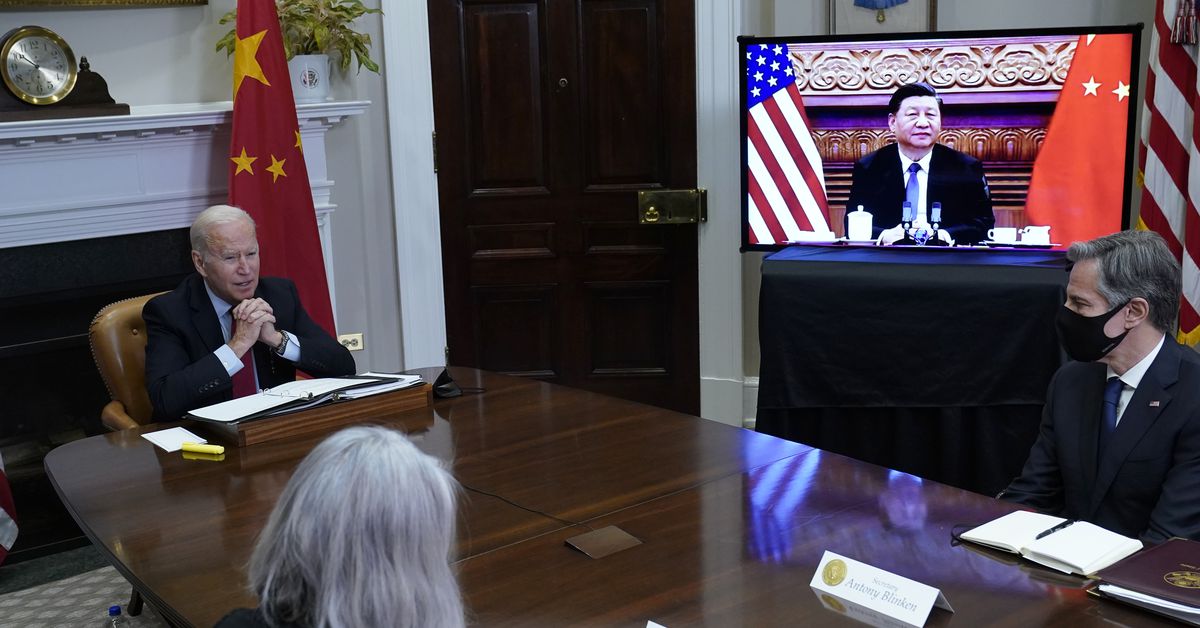
United States government officials, on the other hand, are facing the issue head on. Last month, President Joe Biden announced a diplomatic boycott of the Beijing Olympics and Congress passed a law that blocks the import of certain Chinese goods due to human rights concerns.
Both of these moves were motivated primarily by the Chinese government’s treatment of Uighur Muslims, an ethnic and religious minority group based in the Xinjiang region. In recent years, officials have reportedly sent hundreds of thousands of Uighurs to reeducation or forced labor camps due to the government’s belief that they pose a threat to the country.
“You can’t get away from talking about China when you talk about religious persecution. They are the leading enabler of human rights abuses around the world,” said Sam Brownback, who served as U.S. ambassador at large for international religious freedom under President Donald Trump, during a Jan. 5 event co-hosted by the Religious Freedom Institute and The Catholic University of America.
The new law, which passed with bipartisan support, bans imports from Xinjiang that were made with forced labor. It builds on the Trump administration’s efforts to use economic pressure against the Chinese government.
“Now you have succeeding generations of administrations going at China aggressively,” Brownback said.
But what the American government doesn’t have is the full support of the business community. High-profile companies are moving forward with development plans in Xinjiang even as U.S. officials urge disengagement, as Omar Suleiman pointed out in a recent column for Religion News Service.
For example, Elon Musk recently announced a new Tesla showroom in Xinjiang, sparking an outcry from human rights activists.
“No American corporation should be doing business in a region that is the focal point of a campaign of genocide targeting a religious and ethnic minority,” said Ibrahim Hooper, national communications director for the Council on American-Islamic Relations, in a statement.
It remains unclear whether companies like Tesla will face pushback from everyday consumers. As Phelim Kline noted in a recent piece for Politico, some businesses, including corporate sponsors of the Beijing Olympics, appear to be confident that regular Americans don’t know enough — or care enough — about the plight of Uighur Muslims to boycott or otherwise punish companies that continue to partner with China.
“Corporate backers of the 2022 Beijing Olympics are gambling that Americans just don’t care. They’re betting that, despite a monthslong campaign by U.S. lawmakers and activists to try and leverage sponsorships as pressure against the Chinese government’s human rights abuses, their brands will skate away free from reputational damage,” Kline wrote.
Fresh off the press
What does the military owe to religious objectors to vaccine mandates?
Term of the week: Church replanting
Church attendance and membership is declining nationwide, and, as a result, a wide variety of denominations are dealing with rapidly shrinking congregations. Amid this trend, religious leaders are trying to figure out what to do with declining churches. They can ask worshippers to combine with another congregation, allow the church to quietly die off or embrace a more radical path forward.
Bob Smietana at Religion News Service recently wrote about a group of churches who chose that third option and partnered with ministers who specialize in launching new communities to “replant” their congregation. Although this process differs quite a bit from place to place, the core goal is to rejuvenate the dying church by launching new initiatives and attracting new members.
“The idea is to provide resources and new energy to an old congregation, rather than shutting the church down and starting over,” Smietana wrote.
What I’m reading …
As the country continues to grapple with the legacy of the Jan. 6, 2021, riot at the U.S. Capitol, a group of scholars at the Smithsonian National Museum of American History and the University of Alabama’s Department of Religious Studies have released a project that will help Americans understand religion’s role that day. Titled “Uncivil Religion,” it features essays and photographs exploring protester’s interest in and expression of personal faith.
Religious smartphone apps gained more than users in 2021; they also saw a surge in venture capital funding. In the past year, investors put around $175 million into “software companies developing spirituality tools for smartphones, betting big that tech startups can find a way to make a profit off of prayer, daily devotion, scripture meditation and Bible reading,” Christianity Today reports.
Odds and ends
I took part in a conference at the University of Notre Dame last month that aimed to revisit and wrestle with some of the most contentious events of 2020: the outbreak of the COVID-19 pandemic, protests over police shootings of Black Americans and the presidential election. (Last month, I wrote about the presentation I gave on what I regret about my early coverage of the pandemic.) The video of the public event held at the end of the conference is now available online.
I’m so used to talking about — and typing out — the full name of The Church of Jesus Christ of Latter-day Saints that I forget it’s not on the tip of most Americans’ tongues. A recent episode of “Jeopardy!” reminded me of that fact.
(Note: This is an unedited and auto-generated story from Syndicated News feed. PriyaSaha.Com Staff may not have modified or edited the content body. Please visit the Source Website that deserves the credit and responsibility for creating this content.)
