

When Ushpreet Singh arrived in Whitehorse, Yukon, in late 2020, he was dismayed to find that the town of 33,000 people did not have a gurdwara — a place of worship for Sikhs like him.
At the time, there were about a dozen Sikh families in Whitehorse and a makeshift Sikh committee, but no meeting place.
So Singh set about trying to establish one himself.
“I asked where all the paperwork was and when I saw it, the total donation was $6,000 in 20 years,” the 23-year-old tells Global News.
“It was not enough to establish a temple, it was not enough for anything. I was really upset; this money couldn’t help us. And no one wanted to help.”
One year and one monumental fundraising campaign later, Whitehorse is now home to a gurdwara for a Sikh community that now numbers between 300 and 400 people.
The gurdwara in Whitehorse, Yukon.
Supplied
Singh is one of many new immigrants fuelling religious growth among minority groups in Canada.
As Christian religiosity falls to unprecedented levels (just 68 per cent reported a religious affiliation in Canada in 2019, according to new StatCan data), minority religions such as Sikhism, Islam, Buddhism and Hinduism continue to thrive, fuelled by immigration.
In fact, by 2036, StatCan predicts that the number of people affiliated with non-Christian religions could almost double.
In response, Global News has spent the past two months speaking to members of religious communities across the country and looking at historical data to determine why this is happening. This is the part two of that series.
Sikhism, which is both an ethnic group and religion, now represents 1.4 per cent of all Canadians. That number is up from 0.9 per cent in 2001 and 0.7 per cent in 1996. According to the World Sikh Organization of Canada, there are now approximately 500,000 Sikhs living in the country.
The religion, founded in the Punjab region of India in the 15th century, is built on three core tenets: devotion to God, truthful living and service to humanity. Men are identifiable by their turban, or dastar, worn to keep their hair, which should be unshaven, clean.
It is a “way of life,” Singh says. So when he moved to Whitehorse for work from Toronto due to spiralling living costs, not having a gurdwara was unthinkable.
Singh, helped by a workmate, set about talking to Punjabi news channels across the country to appeal for donations.
Eventually, with money raised from various communities across the country, the group had enough to rent a warehouse for $3,500 per month.
Singh flew to Vancouver to escort the Granth Sahib, the sacred scripture of Sikhism, on its 34-hour drive to its new home, and became the gurdwara’s new preacher.
Ushpreet Singh helped establish the first gurdwara in Whitehorse.
By November 2021, the Whitehorse Sikh community had raised enough money to buy a permanent space for their gurdwara. Singh estimates they’ve spent close to $1 million on purchasing and renovating the building. It underlines the importance the community puts on maintaining their faith, despite being far from home.
“You cannot make a temple with just money, you need dedication. And without love or without dedication, religion is useless,” Singh says.
The Sikh community in Whitehorse is now growing “day by day,” he says. The gurdwara has become central to the community, where homeless people, of any religion, can come for a meal or for shelter. A Sikh service culminates in a shared meal.
The gurdwara is considered much more than just a place of worship, which is why COVID-19 hit the Sikh community hard.
‘It brings people back home’
On a Sunday afternoon in early December 2021, the Gursikh Sabha Canada in Scarborough, Toronto, is bustling. People move from room to room, listening to music performed by preachers flown in from India, while downstairs in the kitchen, small groups eat from metal plates on the floor.
“Whenever you have a crisis, it brings people together, it brings people back home,” says Gobinder Randhawa, a Sikh immigrant from India and former Ontario Sikhs and Gurdwara Council president.
The Gursikh Sabha Canada in Toronto. (Chris So/Toronto Star (Chris So/Toronto Star via Getty Images).
Randhawa arrived in Toronto in 1972, when men wearing turbans were an uncommon sight. He applied for a job with the TTC, Toronto’s public transit agency, and was met with confusion over its dress code.
“They asked me, ‘Well, what will you do with your turban?’ I said, ‘Well, I have kept it on for this long, I will keep it on,’” he recalls.
“I told them, ‘Listen, do you want to hire someone who you can trust?’ He said, ‘Yes.’ I said, ‘This is my religion. This is what I believe in. If I give up my religion, I give up my principles just to have a job. Would you trust me?’ He said, ‘No.’ I said, ‘Then, what’s your problem?”
Read more:
‘We are all humans’ — Singh Katri murder highlights the need for education, group says
Randhawa says the TTC changed the uniform code to accommodate him. He worked there for 31 years.
All the while, the gurdwara was his place of “strength” in a community where “people look at us like, ‘This guy looks different.’”
But Randhawa says it was important to understand that Sikhs were important contributors to society — and thus, their religion plays an important role in 2022. For instance, Sikhism dictates that 10 per cent of earnings should be given to philanthropy.
“Our community is like one family. But it also doesn’t matter what religion you are. We’ll burn our house to give heat to our neighbour,” Randhawa says.
Immigration feeding religious growth
Balpreet Singh Boparai, of the World Sikh Organization, says the community in Canada is being bolstered by a steady influx of young international students. For Sikhs, he says, Canada is the “top choice” for immigration.
“And the first thing people do once they arrive in a community is go and find their nearest gurdwara,” he says.
Between 1971 and 2011, immigration exploded in Canada, after the revising of the Immigration Act in 1976.
According to historic StatsCan data, in those four decades, 711,400 Muslims moved to Canada, as did 243,740 Buddhists, 340,875 Hindus, 71,448 Jews and 274,955 Sikhs. At the same time, most Christian denominations were in a state of steady decline after peaking in the 1960s and 1970s.
Nowadays, these minority religions are at the point of surpassing once major religions in Canada (Muslims account for 3.7 per cent of Canadians, while the United and Anglican churches account for 3.8 per cent). And they’re predominantly made up of immigrants.

Those born outside Canada were more likely than those born in Canada to report being Muslim (12 per cent versus one per cent), Hindu (six per cent versus 0.3 per cent), Sikh (four per cent versus 0.6 per cent), according to StatsCan.


They were also more likely to participate in a group religious activity at least once a month (36 per cent versus 19 per cent) or on their own at least once a week (42 per cent versus 28 per cent).
Younger immigrants were also more likely to be religious. People born outside Canada between 1980 and 1999 were more likely (71 per cent) than those born in Canada (59 per cent) to report having a religious affiliation. Among people born between 1940 and 1959, there was little difference.
Read more:
Canadians need to step up to tackle online hate — even with ‘crazy uncles’, says expert
But that hasn’t meant that safeguarding the future is easy.
Boparai says while affiliation may be high in younger generations, the second generation does not have the same interest in managing the gurdwaras.
“There hasn’t been a passing of the reins to the second generation as there has been in the past. They don’t have the same interest.
“One gurdwara tried to hand over to a younger youth group and that lasted a little while and that failed and they were asked to hand over control again.”
Places of worship help immigrants connect
According to StatCan projections for Canada, by the year 2036, the number of people affiliated with non-Christian religions could almost double, to make up between 13 per cent and 16 per cent of Canada’s population, compared with nine per cent in 2011.
The Muslim, Sikh and Hindu faiths, in particular, “would see the number of their followers grow more quickly,” due to being “over-represented among immigrants compared to their demographic weight in the population as a whole.”
Abdie Kazemipur, a University of Calgary sociologist and the chair in ethnic studies, says the numbers reflect the fact that immigrants to Canada are coming from less developed, more religious countries. New immigrants then seek out places of worship as a way to connect with others.
“A lot of immigrants have gone to these religious communities in search of those lost connections that they had back in their countries of origin. And what is interesting here is that some of these, not very many, but some of these people are people that are not necessarily religious themselves,” Kazemipur says.
“Most of the studies that have been done recently, on Christianity even, show that most of the vitality in terms of religion is coming from the immigrant community, not necessarily the native-born population.”

He says this was particularly true for the Muslim community, who also had to deal with rising levels of Islamophobia and a “misperception” that Muslims have a stronger attachment to their faith.
“That perception has created an intellectual environment in which every time that someone wants to encounter a Muslim or wants to learn something, they think that they have to start from religion.
“All these other socio-demographic, socio-economic factors that are so powerfully present in everybody else’s lives, it seems in this perception that they are not relevant for Muslims.”
Because Muslim people were so frequently being asked about their faith, it also meant that those who were more loosely associated with it were more likely to go and learn about it, which also boosted religiosity, Kazemipur says.
Islam is now the largest non-Christian religious group and the fastest-growing religion in Canada, accounting for 3.7 per cent of Canadians. That’s up from 1.5 per cent in 2001 and 1.1 per cent in 1996.
Mosques overflowing with people
Unlike churches nearby that sit nearly empty during weekend services, on a Friday at noon in mid-December 2021, Masjid Toronto is overflowing with people. Due to COVID-19 restrictions, people now have to book online for a space — which is especially important for Friday’s Jumah prayer, the most important of the week and the one men are required to attend.
Men in thobes and women in hijabs jostle for space in their respective rooms as the call to prayer sounds. The imam reiterates how important it is to book online, saying he’s turning people away when the mosque reaches capacity.
Masjid Toronto is struggling to handle the sheer number of people coming to each service. (Rick Madonik/Toronto Star via Getty Images).
Afterwards, Rania Lawendy, national director of the Muslim Association of Canada, tells Global News there simply aren’t enough mosques to accommodate the city’s growing Muslim population. Religion “plays a huge role” in everyday life for Muslims, she says, and that hasn’t changed in the face of modern life.
“Islam is a way of life. And that’s not just a statement, it really does encompass everything. It encompasses our resilience, our understanding of justice and our understanding of really being of benefit to others. It’s not just worship, but it’s your dealings, so your dealings with your neighbours and how you are at work,” Lawendy says.
Rania Lawendy, national director of the Muslim Association of Canada, says Islam is a ‘way of life.’.
Supplied
“Religiosity doesn’t just encompass going to the mosque and praying, but how are you in your everyday life? How are you with other people? What is your integrity? What do you feel your purpose is and are you a benefit, not only to Muslims, but to all of Canadian society.”
Tragedies such as the London attack, when a Muslim family was killed, have hit the community hard, she says. But faith has “kept us resilient.”
“When something bad happens, it’s perceived as a test and people are rewarded for it. So our viewpoint of things like the pandemic are very different,” she says.

“It’s almost like if you didn’t have your faith, what a miserable life you would have.”
Lawendy herself is a testament to that. She says her faith helped her through the toughest period of her life: when she was 25 and she lost her second child, her father and had a miscarriage all within six months.
“They brought me like a psychiatrist. And I’m like, ‘What is this for? And they’re looking at my record saying, ‘You can’t be OK. You’re 25 years old.’ And I was like, ‘No, I’m OK.’ And I really was OK.”
That resilience, and the mosque community, helps new immigrants find their way in a new country, she says.

Syrian immigrant Asmaa Ghadban, who moved to Vancouver Island from Jordan in late 2019 as a refugee, says when she and her family first arrived, their Christian sponsors accompanied them to the mosque and continued to do so for several weeks.
Her eldest daughter, who wears a hijab, was worried about attending school. But the school was accommodating.
“When I registered my kids, I told the principal and the office there my girls will pray. They told me, ‘OK, don’t worry, we will make them a special place or we will get them a room,’” Ghadban says.
Asmaa Ghadban, pictured with her husband and three children.
Supplied
Her three children now go to the mosque three times per week and learn Arabic.
“Religion is the curriculum of our life,” she says.
“I started growing those seeds in the heart of my kids, because maybe in the future, they will remember that.”
‘Canada has allowed me to live my Islamic life’
Kazemipur says because Islam provides a framework for how life should be lived, there’s “more room for religion” in Muslims’ everyday lives.
The community had also become more tight-knit than perhaps they would have been in their home countries due to a rise in Islamophobia after 9/11.
“(Muslims) have become more alert to the fact that religion is playing such a big role in their lives, and in the minds of people who are viewing them,” he says.
Tina Aseffa says converting to Islam felt ‘natural.’.
Supplied
Tina Aseffa, from Ethiopia, converted to Islam while at university in Hamilton studying for a bachelor of science. She’d been raised Catholic, courtesy of her half-Italian mother, but her sister had grown interested in the key tenets of Islam and while initially against it, Aseffa then found herself identifying with it too.
“There came a time when I felt like I’d be living a lie. And you can lie to people, but how could you lie to yourself?”
The conversion caused ructions in her family and left her not speaking to her mother or father for two years. But the Muslim community stepped in to fill the void, teaching her Arabic, introducing her to friends and even helping to pay her rent.
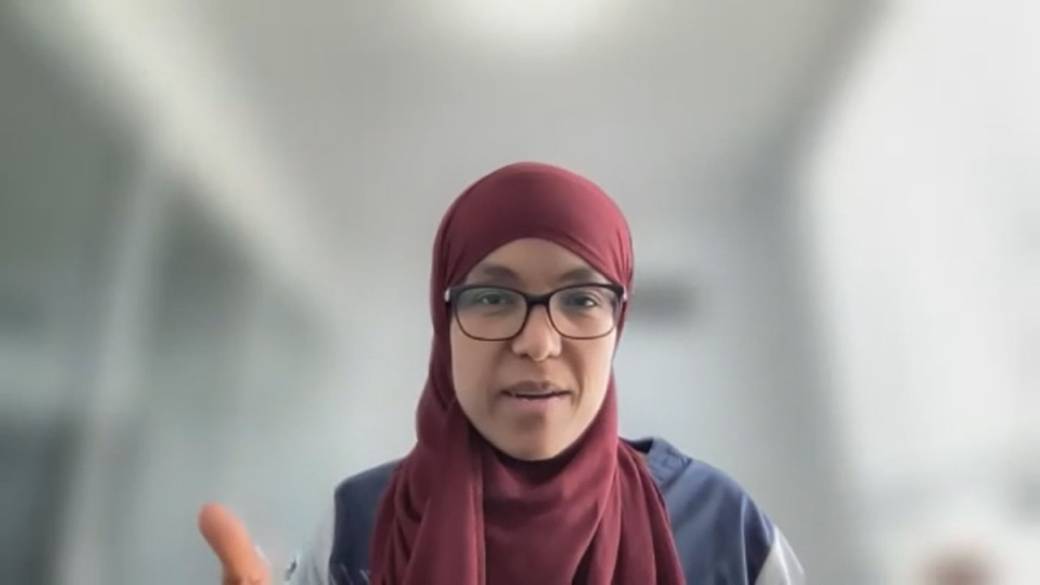
While she admits that she’s experienced plenty of Islamophobia — she’s been insulted on the street, yelled at to “go back to where you came from,” targeted for searches at airports, even insulted by a store worker while buying her very first skirt the weekend she converted — she says she’s never looked back.
“Is there discrimination? Yes. Is there Islamophobia? Yes. Do I feel targeted at times? Yes. But at the same time, there’s the halal storage, there’s the schools, there’s the mosques.
“Canada has allowed me to live my Islamic life.”
© 2022 Global News, a division of Corus Entertainment Inc.
(Note: This is an unedited and auto-generated story from Syndicated News feed. PriyaSaha.Com Staff may not have modified or edited the content body. Please visit the Source Website that deserves the credit and responsibility for creating this content.)
